
The VRAG-R is a static actuarial instrument meant to assess risk for violent recidivism among individuals in the criminal justice system or forensic mental health system, who have been charged with and/or convicted of a violent offence, or who have committed a violent offence and were found unfit to stand trial (also referred to as incompetent for trial) or not criminally responsible due to mental disorder (also referred to as Not Guilty by Reason of Insanity [NGRI] in some jurisdictions).
It contains 12 items that address age, developmental history (e.g., early school maladjustment), violent and nonviolent criminal history, marital status, and general antisociality. It has good rater reliability and strong predictive accuracy for violent recidivism.

CPORT is a specialized risk assessment instrument designed to estimate the likelihood of sexual reoffending among individuals convicted of child sexual exploitation material offences; also known as child pornography offences. It evaluates risk based on factors related to offence behavior, criminal history, and psychosocial characteristics. CPORT fills a critical need for risk assessments in cases where there is no known contact offending but significant risk management decisions must be made. The CPORT is the most researched and best validated risk instrument for men whose only sexual offences involve child sexual exploitation materials.
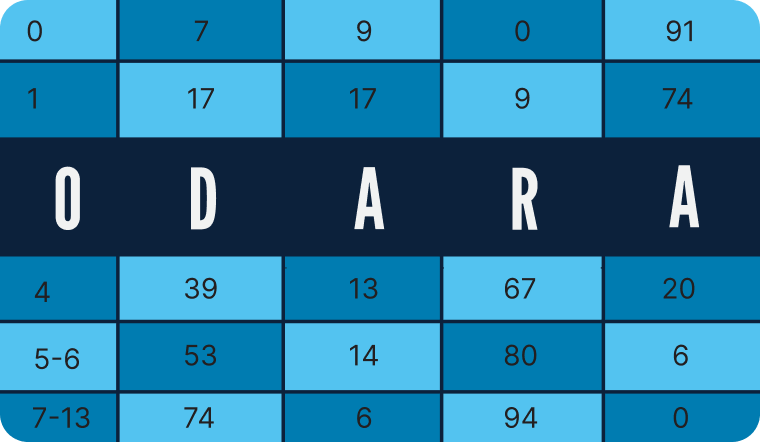
The ODARA is a 13 item actuarial instrument created by N. Zoe Hilton, Ph.D., and colleagues at the Mental Health Centre Penetanguishene, in collaboration with the Ontario Provincial Police, and first published in 2004 by N. Zoe Hilton, Grant T. Harris, Marnie E. Rice, Carol Lang, Catherine A. Cormier, and Kathryn J. Lines. The ODARA is primarily for use with adult men with a history of physical violence against an intimate partner and can also be used with adult women. The ODARA is one of the most widely used intimate partner violence risk assessment instruments in Canada and is extensively used in the United States and some European nations.
For coding questions on the ODARA, users should first consult the full scoring manual, available here:
Users may also direct coding questions to an ODARA Independent Trainer found on this page [beginning Fall, 2025].
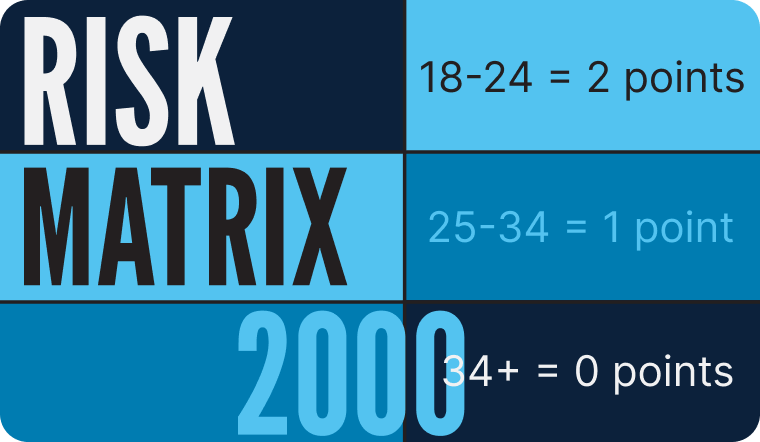
Risk Matrix 2000 (RM2000) is a statistically-derived risk classification process intended for adult males who have been convicted of a sexual offence. It can be scored quickly based on criminal history and victim demographic information (no interview required).
Originally developed in England and Wales, the coding rules have been adapted for international application and it has been validated in several countries. It has also been validated with individuals convicted of Child Sexual Exploitation Materials (CSEM) offences and is appropriate to use for this population.
The RM2000 contains two scales: the Sex scale assesses risk for sexual reoffending and the Violence scale assesses risk for non-sexual violence reoffending. These items can also be organized into treatment need indicators that can identify cases likely to have meaningful criminogenic needs in the areas of sexual deviance versus general antisociality.
Static-2002R is an actuarial risk assessment tool designed to estimate risk of sexual recidivism among adult males who have been convicted for a sexually motivated offence. It includes 14 items organized into 5 domains (age, persistence of sexual offending, deviant sexual interests, relationship to victims, and general criminality). It can be scored based on criminal history information (interview not required). It adds unique information in predicting sexual recidivism above and beyond Static-99R.
BARR-2002R is an actuarial risk tool that assesses risk for violent and general (any) recidivism among those with a sex offence conviction, which is information not provided by Static-99R. Once Static-2002R is scored, BARR-2002R total scores can be computed from a subset of Static-2002R items (no additional information is required).

Static-99R is an actuarial risk assessment tool designed to estimate risk of sexual recidivism among adult males who have had a charge or conviction (or equivalent) for a sexually motivated offence. It includes 10 items assessing criminal history, demographic information, and victim characteristics (interview not required). Static-99R can be used in correctional and mental health settings. It is the most extensively validated sexual recidivism risk assessment tool and has been used in at least 30 countries worldwide.